

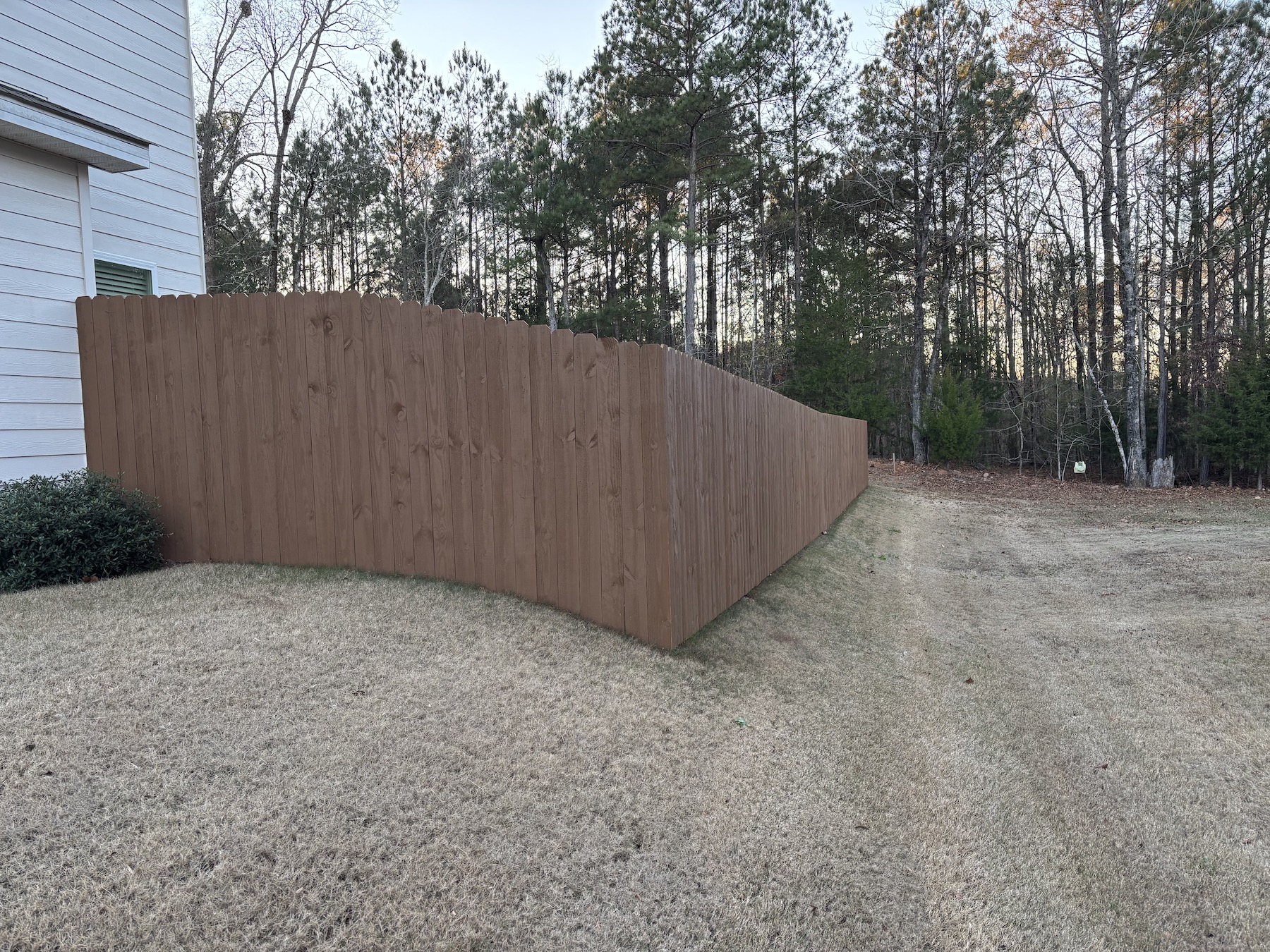
Make sure you fence company is considering all of the possible implications of the fencing material and design choices like maintenance, upkeep, effectiveness, cost, and more.
No two houses or communities are the same, have the same standards, or have the same needs. Certain neighborhoods will require your fence to be built with certain materials, specific heights, and with certain gate sizes. Pools are required to have fences built around them for safety of children and pets as well.
Over 40% of American households have pets, from cats and dogs all the way to chickens and cows. The larger the animals, the strong the fence needs to be to keep them within the yard. Large plats of land for cows and horses would be untenable for a wooden privacy fence, so a farm fence with cross beams is a much wiser choice. Using less than half of the lumber as a privacy fence, a farm fence is able to keep the larger animals safe while still giving a clear sense property lines and sections.
Other households with larger yards may be better served with chain link fences that are able to go much further at a lower price point. The design choice of your fence may also be impacted by the shape of your yard. For instance, an existing retaining wall may make certain kinds of fences unneeded or impractical. Similarly, very sloped yards may make a privacy fence ineffective.
If your home has specific wood accents or material, choosing a fence material to match your home may be a more cost effective solution than painting, staining, or changing your house fixtures. While many homeowners won’t consider the way a fence look in conjunction with your shutters or shingles, it’s those accents that can make a new fence project design seem like a value-add or an eyesore.
